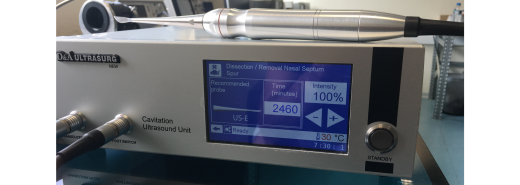
The ultrasonic surgical system consists of a generator that produces high-frequency vibrations at 44,000 Hz.
These vibrations are transmitted to the ultrasonic surgical instrument, which acts precisely on the targeted tissue, such as the tonsils, uvula, nasal septum and other ENT structures.
The clinic is equipped with the state of the art Lora-Don ultrasonic surgical system, a latest-generation technology designed to enable precise, minimally traumatic and virtually bloodless ENT procedures across a wide range of surgical applications.
Applications of ultrasonic surgery
Ultrasonic surgical technology can be used in a wide range of ENT procedures, including:
- Tonsillectomy, cryptolysis and tonsil reduction for enlarged tonsils, cryptic tonsils and the treatment of chronic bad breath (halitosis)
- Correction of nasal septal abnormalities, including cartilaginous spurs
- Treatment and reduction of hypertrophic nasal turbinates
- Uvulopharyngoplasty for the surgical treatment of snoring and obstructive sleep apnea
- Lingual frenulum release (tongue-tie surgery) for the treatment of speech and articulation difficulties
- Release of nasal adhesions (synechiae)
- Removal and reduction of nasal polyps
- Treatment of nosebleeds (epistaxis), including cauterization of bleeding vessels using a specialized ultrasonic tip
Advantages of ultrasonic surgery:
1. Minimal postoperative discomfort
Ultrasonic surgery is designed to minimize tissue trauma and can often be performed without conventional surgical instruments such as a scalpel or extensive suturing.
2. Minimal bleeding
The ultrasonic instrument allows simultaneous cutting and coagulation of small blood vessels, helping to significantly reduce intraoperative bleeding.
3. Precise surgical treatment
The high-frequency ultrasonic vibrations allow precise treatment of the targeted tissue while minimizing unnecessary trauma to the surrounding structures.
4. Reduced thermal injury to surrounding tissues
Compared with techniques that rely on higher temperatures, such as certain laser procedures, ultrasonic technology operates at relatively low temperatures and can help minimize thermal damage to adjacent tissues.
5. Early improvement of symptoms
Depending on the procedure performed, patients may experience improvement in their symptoms from the first postoperative night.
6. Can be performed with different types of anesthesia
Depending on the procedure and the patient's individual needs, certain ultrasonic ENT procedures may be performed under local anesthesia, sedation or general anesthesia.
7. Faster recovery and discharge
The minimally traumatic nature of ultrasonic surgery can contribute to a more comfortable recovery, and in selected cases patients may be able to return home within a few hours after the procedure.
Are you looking for answers and seeking a solution to your health concerns?
Monday to Thursday: 5 pm - 8 pm and Friday: 10:30 am - 1 pm
Call usOR
Please fill out the contact form: