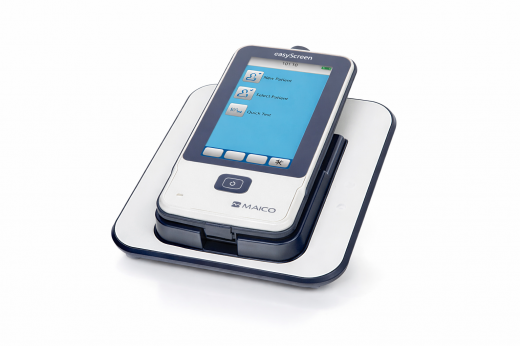
Otoacoustic emissions are a modern, non-invasive diagnostic method used to assess the function of the cochlea (inner ear). The method objectively and painlessly measures the response of the cochlea in the form of acoustic energy (sound).
Essentially, it is a method for the objective assessment of hearing that does not require the patient's attention or cooperation.
The system consists of a specialized setup that includes a computer with appropriate software, an otoacoustic emissions device and the corresponding probe, which is fitted into the child's external ear canal using a special ear tip.
If the child remains quiet, the examination may take only a few minutes or even a few seconds.
In addition to infants and children, otoacoustic emissions testing is useful for assessing hearing in individuals who are unable to cooperate sufficiently to undergo a conventional audiogram.
These may include elderly people with dementia, individuals who have suffered a stroke, people with autism, and others.
Premature newborns have higher rates of immaturity and, consequently, a greater likelihood of absent or abnormal otoacoustic emissions. It should be noted that hearing screening in newborns using otoacoustic emissions helps rule out the most common causes of severe hearing loss, namely abnormalities affecting the inner ear and cochlea.
The examination is very easy and quick, completely safe and does not cause any discomfort to the person being examined. The results are available immediately after the examination.
Are you looking for answers and seeking a solution to your health concerns?
Monday to Thursday: 5 pm - 8 pm and Friday: 10:30 am - 1 pm
Call usOR
Please fill out the contact form: