Which are the modern bloodless techniques for treating sleep apnea.
In severe cases of snoring and in cases of obstructive sleep apnea (OSA), the use of surgical ultrasound technology has, in recent years, become an ideal treatment option.
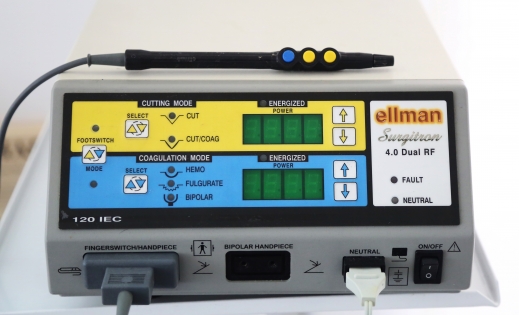
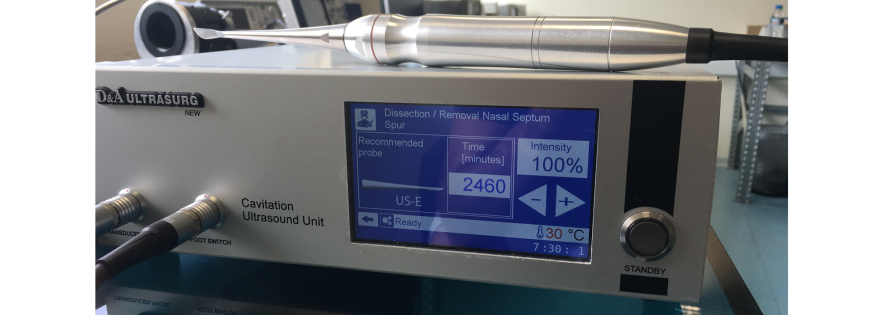
This is an ultra-modern device consisting of a generator that produces high-frequency vibrations, which are transmitted to the ultrasonic cutting instrument. This instrument acts on the anatomical obstruction responsible for snoring (uvula, tonsils, palatal arches, nasal turbinates, cartilaginous septal spur, etc.).
Usually, a simple removal of the uvula is sufficient to put a definitive end to the problem of snoring. In some cases, a minor surgical procedure on the palatal arches or reduction of the tonsils may also be necessary to further open the airway.
The entire procedure is completely bloodless and painless, and its duration does not exceed 15-20 minutes.
In certain cases, it can even be performed without general anesthesia, using a combination of local anesthesia and anesthesiologist-administered sedation.
Within a few hours after the operation, the patient can return home.
The results are immediate, and the patient is relieved of snoring from the very first night. Postoperative pain lasts only a few days, during which the patient must follow a special diet consisting of liquid and lukewarm foods.
More specifically, treatment of the anatomical cause responsible for snoring and obstructive sleep apnea may require:
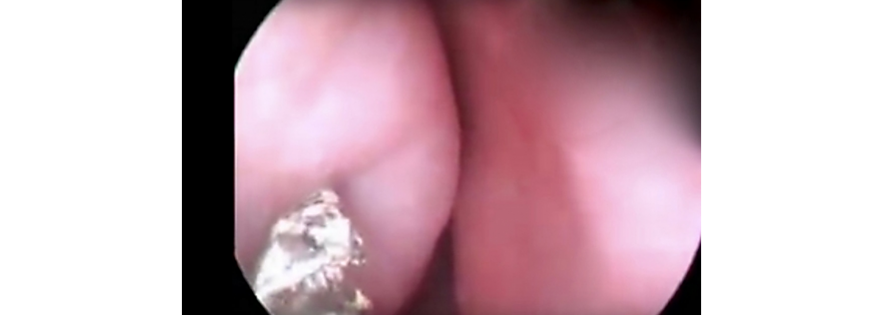
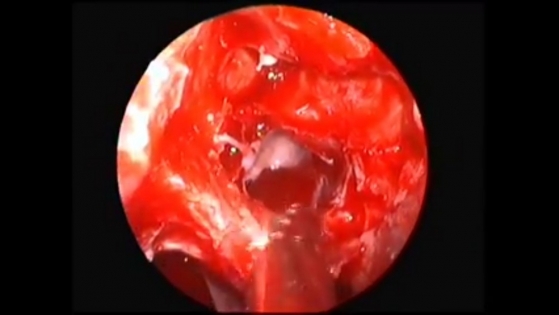
If there is a cartilaginous spur of the nasal septum, it can be easily corrected using the surgical ultrasound technique, painlessly and without bleeding.
The entire procedure can be performed in a hospital under light anesthesia (e.g. sedation) or even with very effective local anesthesia (Xylocaine-adrenaline).
The ultrasound procedure lasts from 15 minutes to half an hour. Once it is completed, light nasal packing (Fusidine) is placed in the nostrils for a few hours, and the patient can then go home.
Thanks to the high-frequency vibrations transmitted by the generator to the titanium scalpel, complete sterilization is ensured for the patient, and postoperative infections are reduced to a minimum.
The instrument used to correct the cartilage of the nasal septum is a titanium scalpel, which ensures bloodless incisions by cauterizing all blood vessels with a diameter smaller than 0.5 cm.
It is usually combined with cauterization of the hypertrophic nasal turbinates to improve nasal breathing.
Ultrasound ensures bloodless conditions and, due to its low operating temperature (below 70 degrees Celsius), does not cause tissue damage compared with radiofrequency and laser techniques.
It is particularly important that hospitalization in a clinic or hospital is not even required for nasal septum surgery, since the entire procedure and the surgical manipulations are much gentler for the patient.
The patient can breathe from the very first night, as special tubes with airways are placed inside the nose and removed the following morning.
There is no external deformity of the nose, nor any swelling or bruising on the face, and the patient's overall appearance is as if no surgery had been performed.
Postoperative pain is almost nonexistent, as there are no injuries inside the nose or large gauze packs causing discomfort.
2) Cauterization of the nasal turbinates using ultrasound.
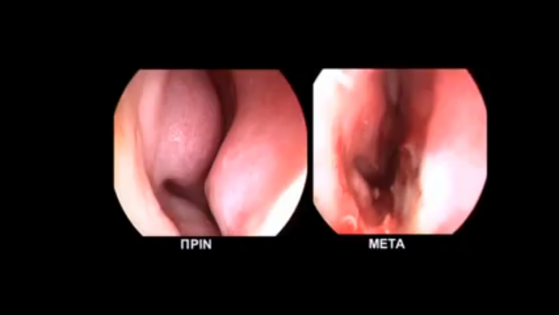
If the patient's snoring is caused by hypertrophy of the inferior nasal turbinates, which almost completely obstruct the nasal passage, especially during nighttime sleep, the most effective treatment is cauterization using surgical ultrasound.
This is a procedure that can easily be performed in the clinic using local anesthesia alone.
The special ultrasonic probe penetrates the body of the nasal turbinate and significantly reduces its size, creating sufficient space in the nasal passage for air to flow through.
Thanks to the high-frequency vibrations, complete sterilization is ensured for the patient.
Furthermore, the low operating temperature of ultrasound helps prevent burns and traumatic tissue injuries, shortening recovery time and making the entire procedure gentler for the patient.
3) Reduction of hypertrophic tonsils using ultrasound (Tonsillolysis)
In cases of excessively enlarged tonsils that are responsible for snoring or even sleep apnea, the best treatment is to reduce their size using ultrasound.
The procedure is completely atraumatic, painless and bloodless, and in selected cases can also be performed in the clinic under local anesthesia.
A special probe is used, which penetrates the tonsil tissue and vaporizes it.
This method is ideal for children and for patients who do not wish to have their tonsils removed, as the functional and protective role of the tonsils is preserved. Their volume is simply reduced, while the remaining tonsillar tissue retains its immune function.
Pain is significantly less than with other methods (conventional surgery, LASER, RF), and the adult or child can return home immediately. By following a special diet for a few days, they can return to their daily activities or to school as early as the following day.
4) Uvula removal and widening of a narrow palate - modified pharyngoplasty
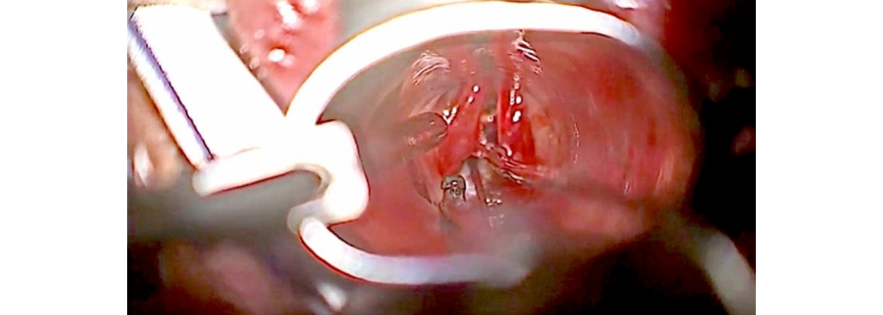
In patients with a very long or flattened uvula that causes snoring or sleep apnea, removal or thinning of the uvula using ultrasound or radiofrequency (RF) under local anesthesia is recommended.
At the same time, if indicated, modified pharyngoplasty (U.P.P.P.) can be performed by removing portions of the palatal arches, if they are narrow and contribute to the development of apnea or snoring.
The ideal instrument used in this case is a very fine probe, approximately the size of a hair, which is completely atraumatic for the tissues of the pharynx and therefore relatively painless, while providing excellent hemostasis by cauterizing all small blood vessels.
5) Stiffening of the soft palate using ultrasound
In patients with an anatomically low-lying soft palate - the tissue located above the uvula - the best and easiest treatment is tissue contraction of the palate using surgical ultrasound.
The entire procedure is performed very quickly under local anesthesia, with the patient seated in the examination chair at the clinic, and lasts only a few minutes.
The ultrasound probe creates symmetrical punctures just above the uvula. In this way, connective scar tissue forms within the palate, resulting in stiffening and slight upward elevation of the soft palate.
Pain following the procedure is very mild, and the patient can return home immediately and resume normal daily activities within a few days.
6) Adenoidectomy using radiofrequency in children and adults.
Hypertrophy of the adenoids affects a large number of children, reducing their quality of life (snoring, apneas, recurrent infections, ear infections).
Their removal using a special radiofrequency adenoidectomy device offers clear advantages over the conventional method.
This technique uses radio-wave frequencies that are fully compatible with human tissues. The procedure must be performed under general anesthesia and lasts only a few minutes.
Afterwards, the child remains at the clinic for a short period of observation and can then return home in very good condition.
Pain is almost nonexistent compared with conventional adenoidectomy, while radiofrequency technology ensures completely bloodless conditions for the child.
The entire procedure is so gentle that the child can return to school as normal from the very next day.
Are you looking for answers and seeking a solution to your health concerns?
Monday to Thursday: 5 pm - 8 pm and Friday: 10:30 am - 1 pm
Call usOR
Please fill out the contact form: