In which cases should surgical ultrasound be used, and what are the advantages of the use of ultrasound in nasal diaphragm surgery.
The nasal septum is essentially an anatomical partition between the two nostrils of the nose.
It consists of a cartilage and a bony part. Approximately half is made of cartilage - the part toward the outside, while the other half, toward the inside, is made of bone. In cases where the anatomical problem of the septum is located in its cartilaginous part, surgical ultrasound is ideally indicated.
This is a device consisting of a generator that produces very high-frequency vibrations of up to 44,000 Hz, which are transmitted to the ultrasonic cutting instrument, consisting of a titanium scalpel.
The ultrasound tip acts on the cartilaginous part that needs to be removed - usually a cartilaginous spur - and thus cuts it painlessly and bloodlessly.
When there is no problem with the bony part of the septum, the patient does not need to undergo the conventional operation, but the septum can be treated with surgical ultrasound.
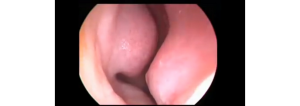
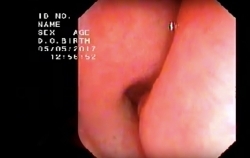
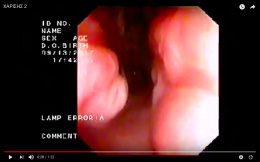
In order to determine which method should be used, it is necessary to perform a preoperative examination with a special camera, which will accurately diagnose the pathology of the septum.
It is also useful to take a detailed medical history, which will clarify the causes of the deviation or displacement of the nasal septum (congenital causes, injuries, trauma, etc.).
This enables us to determine whether the anatomical problem of the septum is located in the bone, in which case conventional septal surgery should be performed, or in the cartilage of the septum, in which case treatment with surgical ultrasound is clearly preferable.
The advantages of correcting a deviated septum with ultrasound are as follows:
- They make the entire septal procedure much shorter and gentler for the patient, who can return to their activities more quickly.
- An overnight hospital stay is not necessary, as the patient can return home the same day (one day clinic).
- They are completely bloodless, as they cauterize all small blood vessels.
- Intraoperative infections are avoided, thanks to the very high frequencies of ultrasound, which create ideal sterilization conditions.
- There is almost no postoperative pain, as neither a chisel nor a scalpel is used.
- They can be performed even without general anesthesia, using local anesthesia or sedation.
- There is no blackening, swelling or bruising of the face or nose.
Connection between snoring and nasal septum treatment
One of the main anatomical causes that lead to narrowing of the upper airway and consequently to snoring or even apnea is anatomical abnormalities in the development - and mainly deviation - of the nasal septum.
This anatomical abnormality of the nose leads to difficulty breathing through the nose, particularly during sleep, resulting in mouth breathing during sleep, which promotes vibration of the soft tissues of the pharynx and the onset or worsening of snoring.
For this reason, treatment of a deviated septum and widening of the nasal airway are of crucial importance in the management of snoring.
Are you looking for answers and seeking a solution to your health concerns?
Monday to Thursday: 5 pm - 8 pm and Friday: 10:30 am - 1 pm
Call usOR
Please fill out the contact form:

 "
 "