Find out how to diagnose the causes of obstructive sleep apnea and which modern invasive method can treat this disorder.
First of all, a very careful medical history is taken from the patient suffering from snoring or sleep apnea. This includes information about habits (smoking, time of last meal, etc.), any medication, sleeping position, lifestyle, etc.
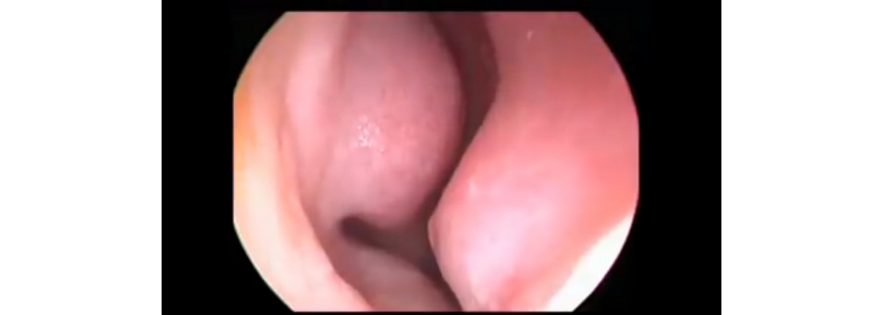
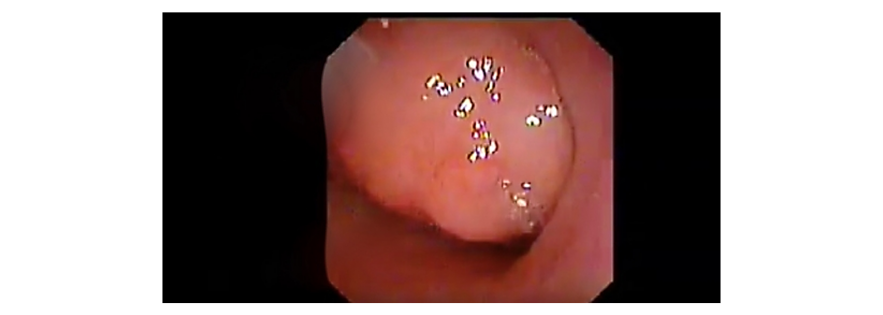
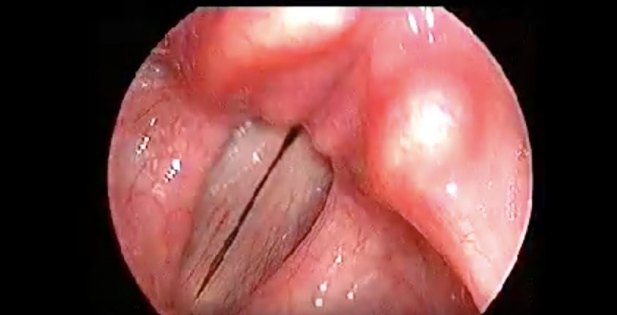
Next, an examination is performed using a high-resolution video endoscope to identify the anatomical problem (uvula, palatal arches, tonsils, nasal septum, turbinates, adenoids) responsible for snoring and/or sleep apnea.
The state-of-the-art Olympus flexible video endoscope, thanks to its very small diameter (just 3.2 millimeters), allows easy, painless and rapid examination of the entire upper airway, from the entrance of the nose to the laryngeal glottis and the entrance to the trachea, without losing continuity between the anatomical structures, as the examination is performed in one continuous pass.
Furthermore, thanks to its special hydrophilic coating and soft construction, the video endoscope glides more easily as it passes through the soft tissues of the airway, making the examination completely painless.
The examination requires only very mild local anesthesia of the nose using a cotton pledget soaked in Xylocaine.
Depending on the findings, the doctor informs the patient about the possibility of treating the anatomical causes of snoring or sleep apnea using the most advanced surgical techniques.
The most common anatomical obstructions responsible for narrowing the airway and predisposing patients to snoring and sleep apnea are deviation of the nasal septum, hypertrophy of the inferior nasal turbinates, enlarged adenoids, enlarged tonsils, and especially an enlarged uvula and narrow palatal arches.
Important predisposing factors include obesity, a short and thick neck, smoking, alcohol consumption before sleep, heavy meals rich in fat shortly before lying down, sleeping on one's back, and the use of sedatives, antidepressants or sleeping pills.
Examination with a flexible endoscope can be combined with the maximal inspiratory effort (Müller) maneuver in a sitting or supine position, which provides additional information about the levels of upper airway obstruction, since severe obstructive sleep apnea syndromes often involve more than one level of obstruction. When obstruction occurs at the level of the epiglottis (a floppy epiglottis) or at the level of the larynx (laryngomalacia that is not apparent while awake), or when conventional treatment methods have failed, drug-induced sleep endoscopy (DISE) may be indicated.
This examination must be performed at a specialized center under assisted sedation and is useful for identifying obstruction levels below the hypopharynx, particularly in the larynx and epiglottis.
If episodes of sleep apnea are suspected, the patient can immediately obtain the Snore-Check device and undergo a digital sleep recording study that same night. The results are analyzed by the Medical Center for Sleep Study - Primary Care and communicated to the patient as early as the following day.
The Snore-Check recording serves as a screening test to confirm whether a full polysomnographic sleep study is necessary when severe sleep apnea syndrome is suspected.
Are you looking for answers and seeking a solution to your health concerns?
Monday to Thursday: 5 pm - 8 pm and Friday: 10:30 am - 1 pm
Call usOR
Please fill out the contact form: