Analysing the factors that cause vertigo and determining the ways to diagnose labyrinth dysfunction.
A visit to an ENT specialist is essential to perform the necessary examinations and determine the causes of the symptoms, so that appropriate medication, dietary measures, or other instructions can be provided.
Clinical Examination - VERTIGO
The clinical examination aims to assess the peripheral and central vestibular systems and the cardiovascular system.
Special tests for the assessment of balance include:
Romberg test: This is useful in acute unilateral vestibular disorders, where deviation occurs towards the affected side.
However, it is not specific for chronic unilateral disorders.
Assessment of basic eye movements, such as spontaneous vestibular and optokinetic nystagmus, as well as saccadic movements.
Nystagmus is now assessed using videonystagmography, which is simpler to perform than electronystagmography.
Warm and cold caloric irrigation of the labyrinths stimulates the horizontal semicircular canal unilaterally.
These tests are used to assess peripheral vestibular dysfunction (vestibular paresis). Cerebellar lesions cause a bilateral increase in the vestibular response.
Assessment for positional vertigo (Dix-Hallpike maneuver or dynamic positional test). This is particularly useful in benign paroxysmal positional vertigo, while the static positional test assesses whether a change in head position induces nystagmus or alters pre-existing nystagmus.
The static positional test indicates the presence of an organic lesion but cannot distinguish whether it is central or peripheral.
Rotational test: This stimulates both semicircular canals, unlike caloric irrigation. This test is used to assess brainstem function.
A normal response consists of a slow phase opposite to the direction of movement and a rapid saccadic phase in the direction of movement.
Posturography: This examination provides important information about the function of the proprioceptive system and the labyrinths.
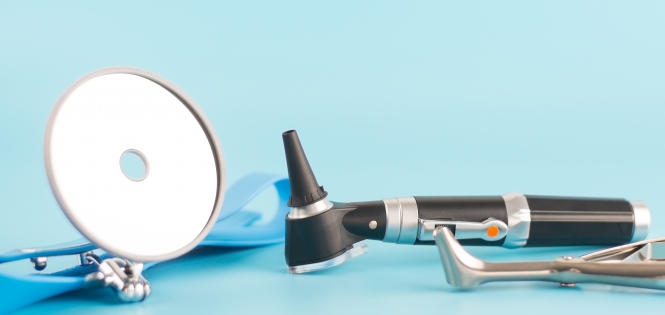
Assessment for the presence of a perilymphatic fistula using a pneumatic otoscope (Hennebert's test). If a fistula is present, nystagmus towards the affected side may be observed. Hennebert's test has a sensitivity of 25%.
There is also the turning test, with a sensitivity of 90%, in which the patient walks in a straight line with their eyes closed and then performs a 180-degree turn to the right or left.
If a fistula is present, the patient will lose their balance towards the affected side.
Complete audiological assessment: Evaluation of vertigo is not complete without assessing cochlear function.
For example, in peripheral lesions, due to the close anatomical relationship between the anterior and posterior labyrinths and the cochlear and vestibular nerves, sensorineural hearing loss may also be present. In central lesions, hearing loss is not observed.
Audiological assessment also helps differentiate between cochlear and retrocochlear lesions, such as Meniere's disease and acoustic neuroma.
Assessment of coordination using the finger-to-nose test and the test for dysdiadochokinesia should also not be neglected, nor should examination of the cranial nerves, including the trigeminal, oculomotor, facial, glossopharyngeal, hypoglossal, accessory, and vagus nerves.
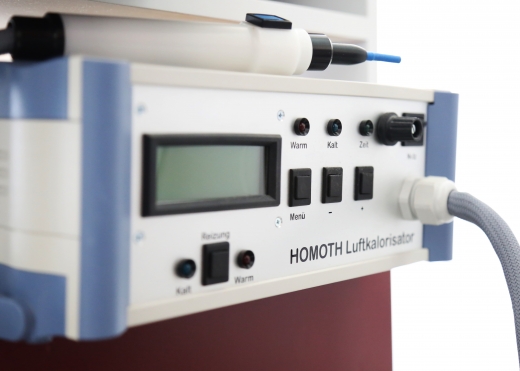
It is necessary to investigate whether dizziness originates in the labyrinth using the state-of-the-art HOMOTH videonystagmography system for the diagnostic assessment of labyrinthine disorders (dizziness, vertigo, and balance disturbances).
The examination lasts approximately 30 minutes and may cause mild dizziness in the patient, which is entirely temporary and subsides within a few minutes.
The patient lies on the examination chair, which is tilted at an angle of 30 degrees. The labyrinth is then stimulated alternately with cold and warm air while the patient remains lying on the chair and wears special camera goggles (Frenzel goggles) connected to a computer.
In less than half an hour, an automatic diagnosis determines whether either labyrinth is affected and identifies which labyrinth is affected, as well as the percentage of reduced sensitivity in the affected labyrinth.
A patient with persistent vertigo should undergo CT or MRI. selective angiography may also be necessary, as in cases of vertebrobasilar insufficiency, subclavian steal syndrome, or carotid artery thrombosis.
Valuable information can also be obtained by auscultating the carotid arteries, as a bruit may be detected in cases of stenosis.
The rotation of the neck should also be tested to assess the possibility of vertebral artery compression due to vertebral displacement.
Blood tests are also very important to investigate possible systemic infectious or autoimmune diseases and to assess blood rheology.
Are you looking for answers and seeking a solution to your health concerns?
Monday to Thursday: 5 pm - 8 pm and Friday: 10:30 am - 1 pm
Call usOR
Please fill out the contact form: