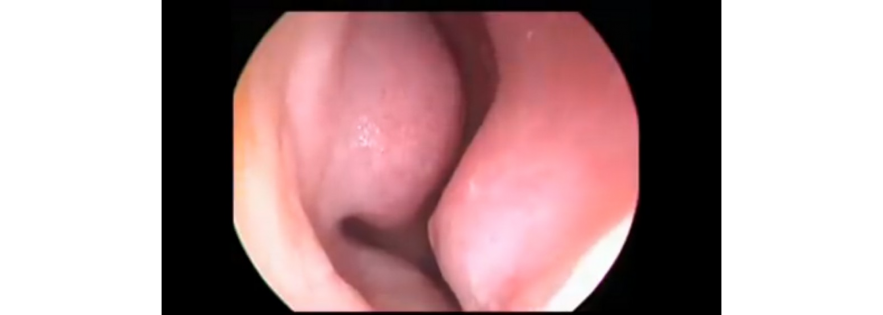
Several patients have become dependent on the excessive use of nasal sprays that unblock the nose and provide immediate relief from breathing difficulties, such as Otrivin, Dexarhinaspray, Vibrocil, Ronal, etc.
All these nasal sprays have vasoconstrictive properties, causing the blood vessels in the nasal mucosa to constrict. The mucosa is the lining that covers the cartilage of the nasal septum and the turbinates.
In this way, the nasal airway opens, allowing the patient to breathe more easily.
Why, however, is the excessive use of nasal vasoconstrictor sprays dangerous?
The danger of using these medications is that their effect lasts only a short time, from 4 to 6 hours, after which nasal congestion usually becomes worse. For this reason, patients who use them extensively may develop a form of dependence and, in practice, significantly shorten the intervals between sprays.
Some patients even use them continuously, every 1 or 2 hours, because they cannot breathe without them, having developed severe dependence.
Frequent and uncontrolled use of vasoconstrictor sprays can cause chronic vasomotor rhinitis, along with irritation and severe rhinitis medicamentosa.
After the 5th or 6th day of use, the vasoconstrictive substance can have a very harmful effect on the nasal mucosa, making it fragile and prone to bleeding and causing the mucosa to become swollen and lax.
This reduces the diameter of the nasal airway, making breathing almost impossible without continuous and prolonged use of the medication, especially during sleep.
In contrast, corticosteroid nasal sprays do not have the harmful effects associated with vasoconstrictors and can therefore be used safely for much longer periods without causing dependence.
For how long can we safely use nasal vasoconstrictor sprays?
The maximum recommended period for using this type of nasal spray is just 5 days.
Thus, if we have a severe cold and the nose is completely blocked, we can safely use Otrivin or Ronal for a maximum of 5 days.
After this 5-day period, there is a risk of developing dependence on the vasoconstrictive substance and experiencing the known medication-related side effects: drug-induced vasomotor rhinitis, dependence and almost permanent nasal congestion.
How can dependence on nasal sprays such as Otrivin or Ronal be stopped?
The simplest approach is to replace the vasoconstrictor spray with a corticosteroid nasal spray, which does not cause dependence, and then gradually attempt to discontinue the corticosteroid as well.
If the patient cannot tolerate stopping or replacing the spray, the best option is reduction of the nasal turbinates using ultrasonic surgical technology or endoscopic turbinate reduction surgery.
Are you looking for answers and seeking a solution to your health concerns?
Monday to Thursday: 5 pm - 8 pm and Friday: 10:30 am - 1 pm
Call usOR
Please fill out the contact form: