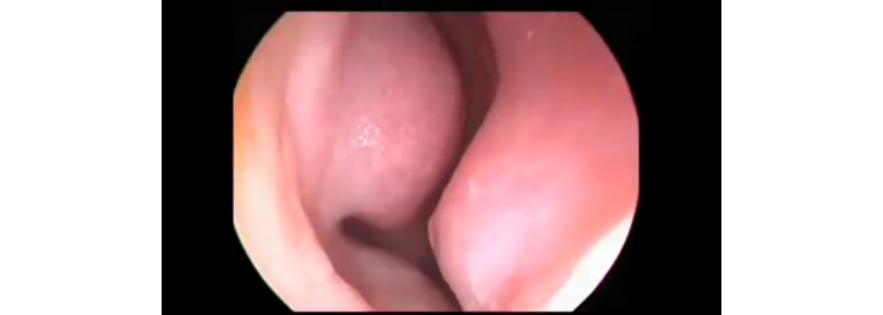
What are cryptic tonsils, which are their symptoms and how can they be treated with the use of ultrasound? What is the treatment for tonsillar hypertrophy?
Cryptic tonsillitis:
Many patients suffer from chronic cryptic tonsillitis. Tonsillar crypts are folds or small recesses on the surface of the tonsils that increase their total surface area.
However, when food debris accumulates inside the tonsillar crypts, it can cause bad breath (halitosis), as the debris decomposes within the tonsils, potentially leading to chronic cryptic tonsillitis.
These food deposits can closely resemble the pus-filled plugs associated with acute suppurative tonsillitis, sometimes making diagnosis and treatment more difficult.
In such cases, the treatment of choice is cryptolysis using ultrasonic surgical technology. Specifically, the ultrasonic tip, which in this case consists of a specialized chisel-like instrument, penetrates the tonsillar crypt and breaks down the tissue, thereby performing cryptolysis.
This procedure eliminates the crypts and creates a smoother, more uniform tonsillar surface. At the same time, it helps clean the tonsils by removing accumulated debris.
The entire procedure can also be performed under local anesthesia and takes no longer than approximately 20–30 minutes. It is described as bloodless and painless. After treatment, the patient can follow a liquid diet for 5–6 days.
The treatment is intended to provide a long-lasting solution without the need for tonsil removal and is suitable for tonsils that do not require surgical excision.
Enlarged tonsils (tonsillar hypertrophy):
Particularly in children and adults with significantly enlarged tonsils that may cause snoring or obstructive sleep apnea, tonsil reduction using ultrasonic technology is a treatment option.
The procedure is designed to reduce tonsil size while minimizing bleeding and tissue trauma, without the use of conventional scalpels or stitches.
Studies conducted in Germany involving children aged 2–8 years have demonstrated potential advantages of ultrasonic surgical techniques compared with conventional tonsillotomy.
The procedure takes approximately 20–30 minutes. The ultrasonic tip is inserted into the tonsillar tissue, where high-frequency vibrations break down part of the tonsillar tissue in a process known as tonsillolysis, resulting in a reduction in tonsil size.
The aim of this technique is to achieve lasting reduction in tonsil size while preserving the tonsils rather than removing them completely.
Are you looking for answers and seeking a solution to your health concerns?
Monday to Thursday: 5 pm - 8 pm and Friday: 10:30 am - 1 pm
Call usOR
Please fill out the contact form: